OpenAI Prompt Caching: How Many Reuses Make It Worthwhile? The Break-Even Thresholds for 2 and 3 Reuses Explained

img-20bab36c8ddd95489ea169bc

Direct answer: under ideal conditions, OpenAI’s default 30-minute prompt caching is already cheaper than no caching from the 2nd use onward, while 12-hour caching only becomes worthwhile at the 3rd use. The ideal conditions here are: the same fixed prefix is fully written to cache once, all subsequent requests hit it, and there are no … Read more


Calculate the API cost of an AI article: input/output price comparison of 7 models

img-e5e8ba271039af9097af631b

The Bottom Line: API Costs for AI Articles — Count the Calls First, Then the Finished Piece Based on the price snapshot in this article, with 10,000 input tokens and 3,000 output tokens, the theoretical cost of a single generation comes out to roughly $0.0066–$0.10. To produce a publishable article, you also pile on revision, … Read more

How much is Gemini 4 Hydrogen? $1.50 input, $7.50 output

img-b78a94541961251d6581a44b

Author’s note: Gemini 4 Hydrogen’s global standard price is $1.50 input and $7.50 output (per 1 million tokens), with no tiers within the 1-million-token window. This article explains the parts of the bill that are easy to miss and runs the numbers with two examples, comparing it against Terra, Sonnet 5.5, and Carbon. Gemini 4 … Read more

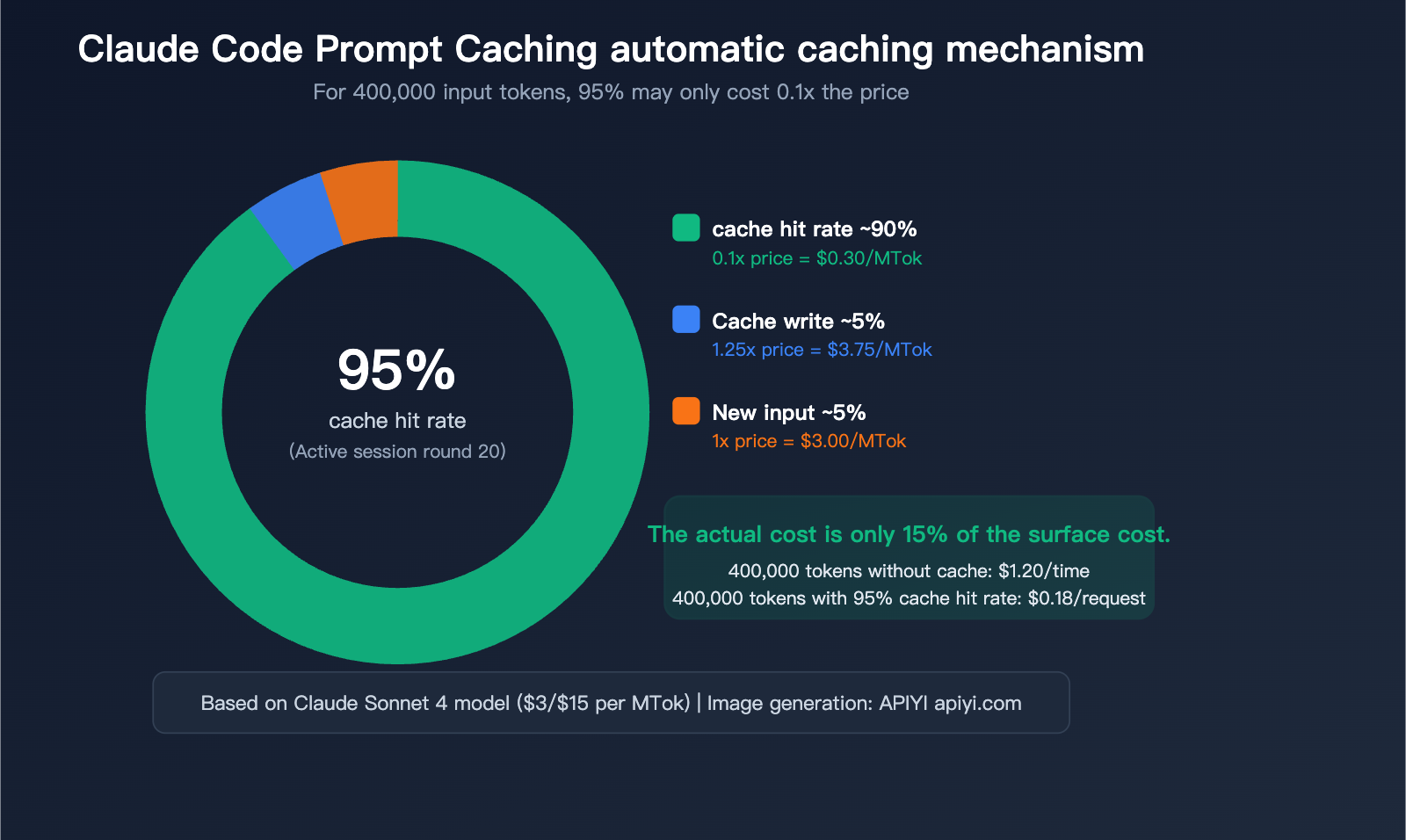
Claude Code cache hit rate increased to 95%: 6 practical tips to reduce 400,000 tokens of input to 50,000

claude code prompt caching token optimization reduce input cost guide en image 0 图示

"Why does my Claude Code request 400k input tokens every time? Why is my bill so high?"—this is the first reaction many Claude Code users have when checking their usage stats. In reality, the vast majority of those 400k tokens have likely been cached, and the actual cost might only be 1/10th of the surface … Read more